
How to Grill Salmon
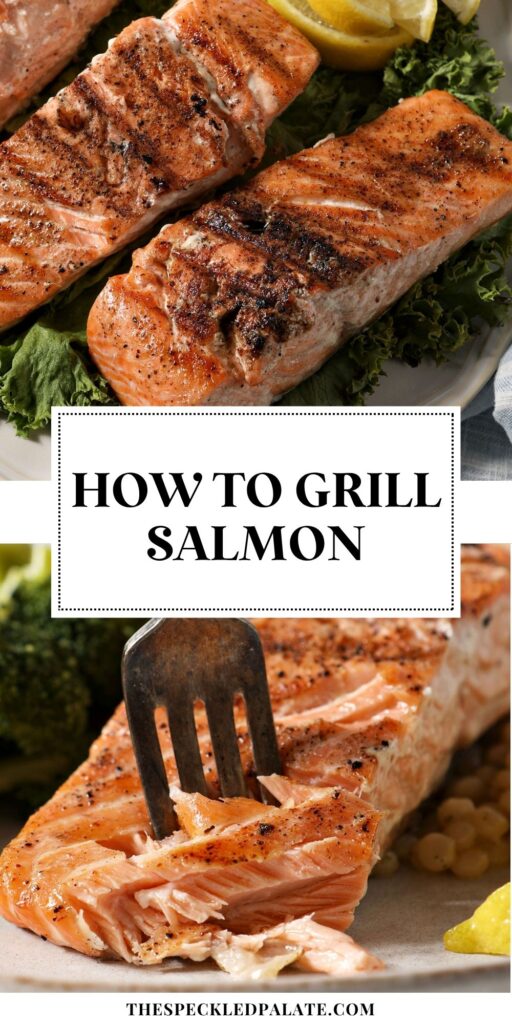
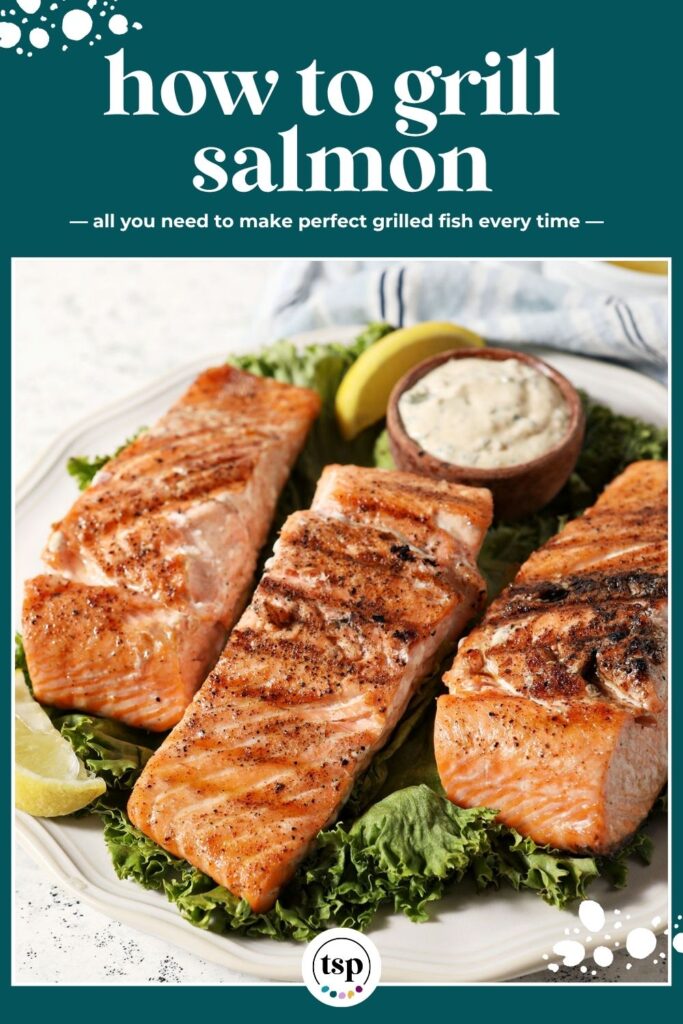
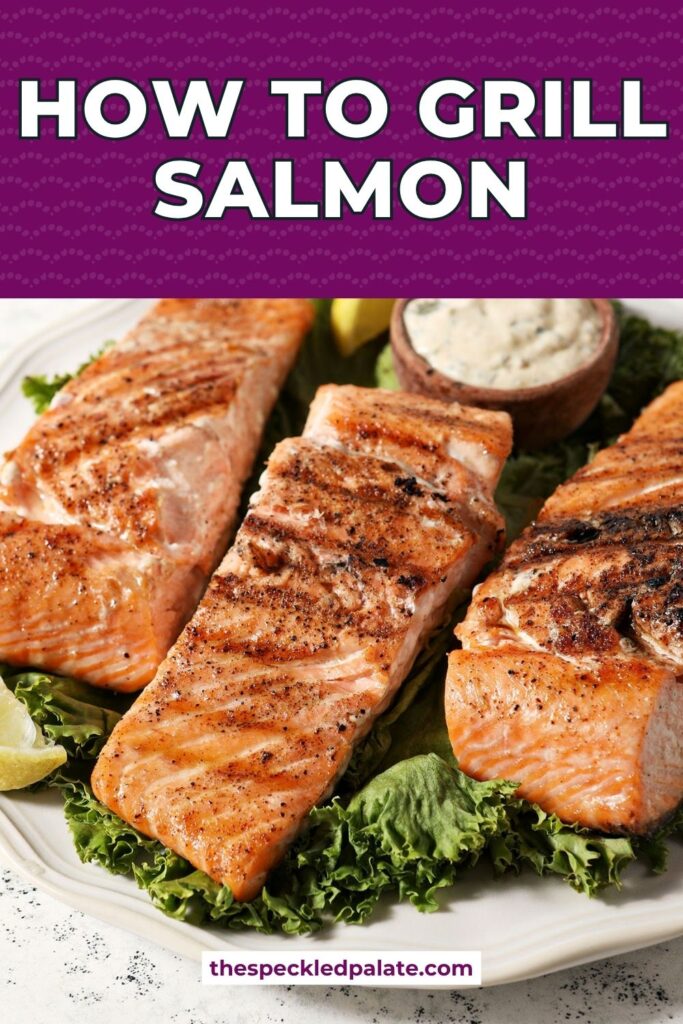
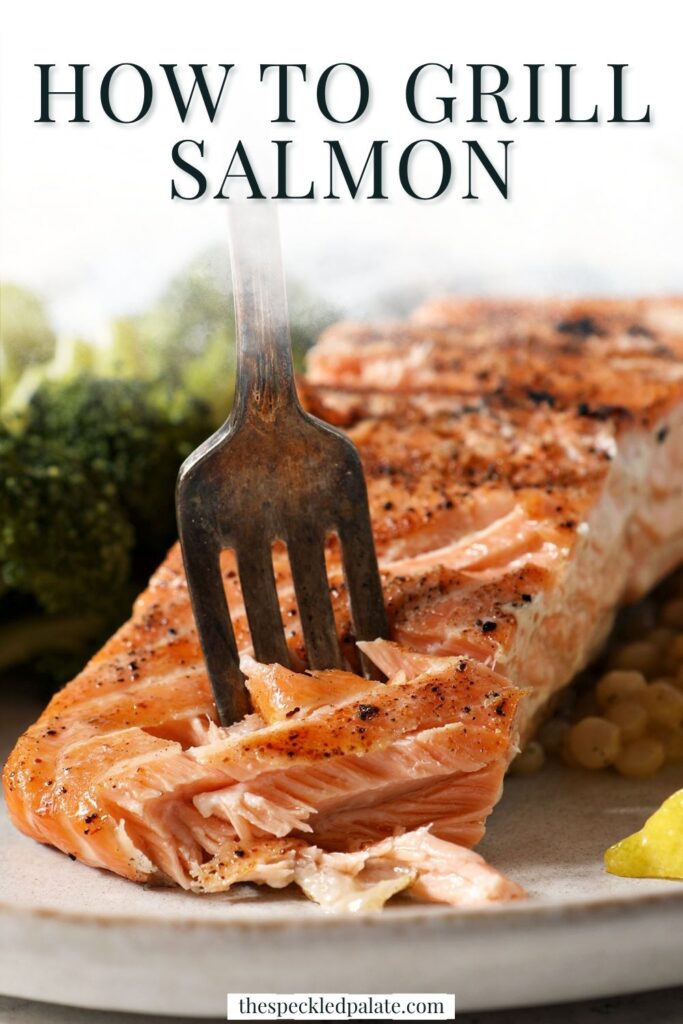
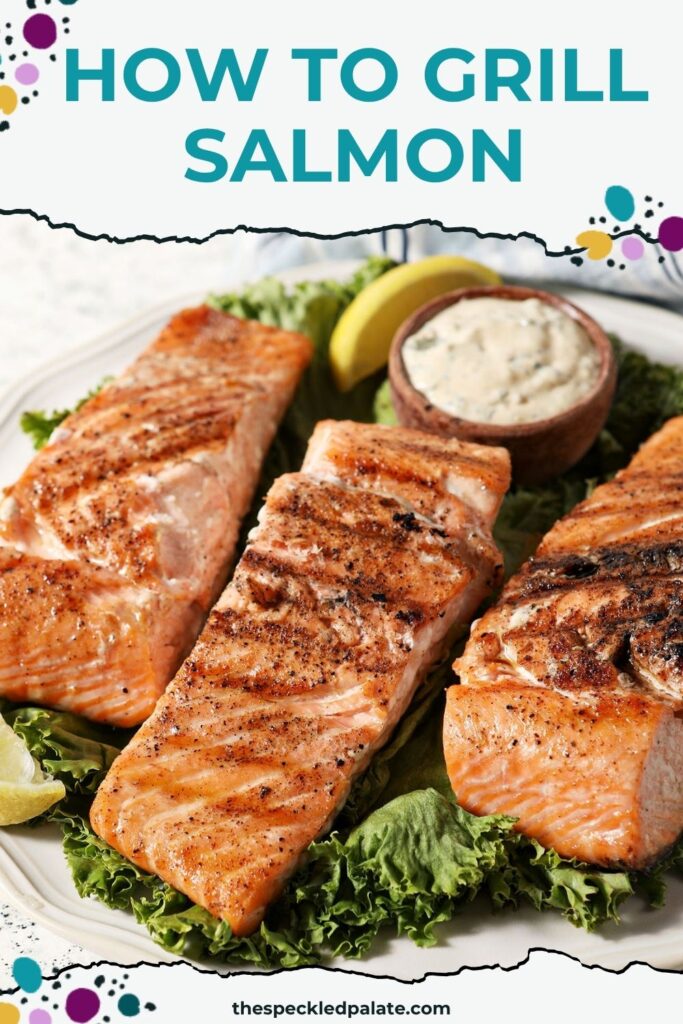
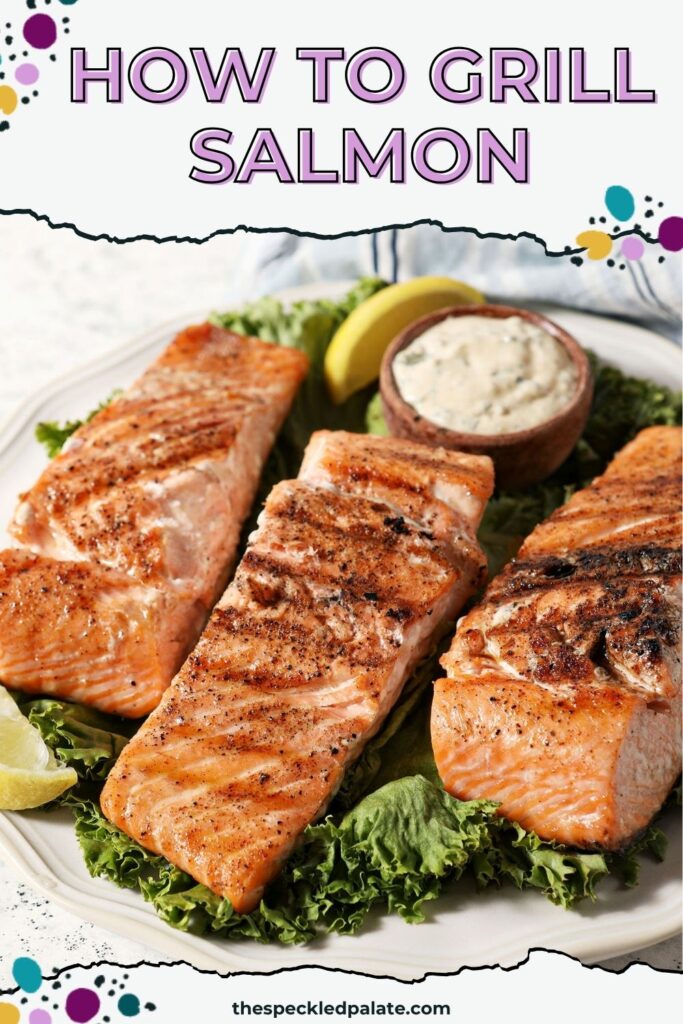
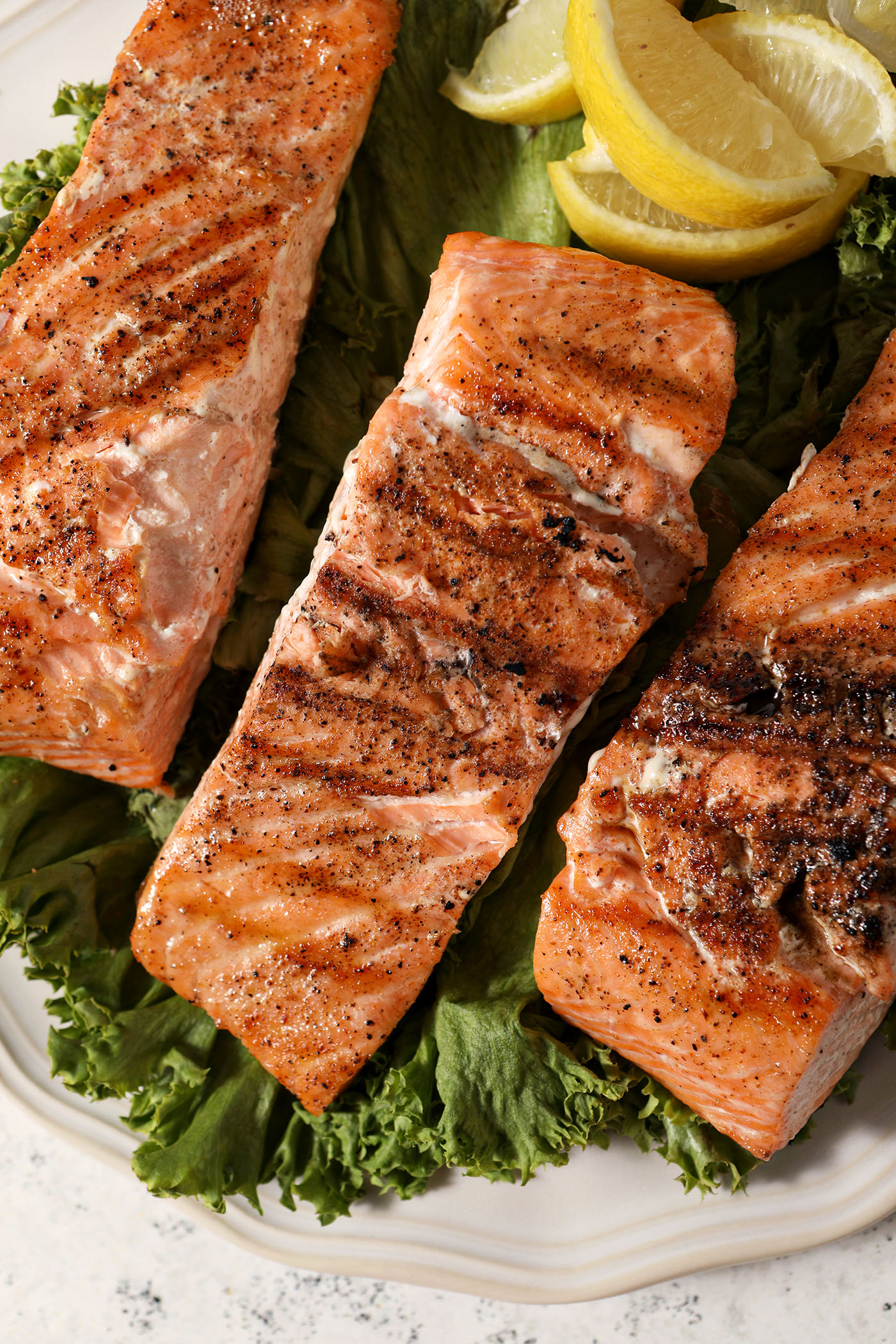
Grilling salmon is a lot easier than you think and this recipe is proof. All you need are three ingredients and a grill to make perfectly cooked, flaky salmon every time. Learn my not-so-secret grilling technique for how to grill fish that should become your go-to all summer long.
Want to save this?
This post contains affiliate links.
I need to be honest with you about something: The grill is intimidating to me.
Yes, I am a grown woman who can do just about anything in the kitchen… and whose job is to do that… but something about standing over an open flame makes me feel a little less competent than I actually am. (Also, our grill caught fire years ago, and I’m still a little scarred from the experience.)
I’m working on this actively, and this summer, with my kitchen currently under construction, I don’t really have an option other than to get comfortable with grilling.
Grilling salmon was one of those recipes I kept putting off because I was convinced I was going to ruin an expensive piece of fish. But here’s what I learned when I finally sucked it up and did it: I got it right the first time, and so can you.
Salmon is a really forgiving fish to start with. It’s widely available, it’s usually sold in pre-portioned filets and it’s forgiving enough that even if you cook it a little beyond the recommended temperature, the rich omega-3 fatty acids that are abundant in salmon keep it from being a total loss. This is not a recipe where one mistake ruins dinner.
We season our salmon with Cajun seasoning, which apparently is not what everybody does, but it should be. This seasoning blend adds a little warmth and a little depth that pair nicely with the natural richness of the salmon.
Why I love this recipe:
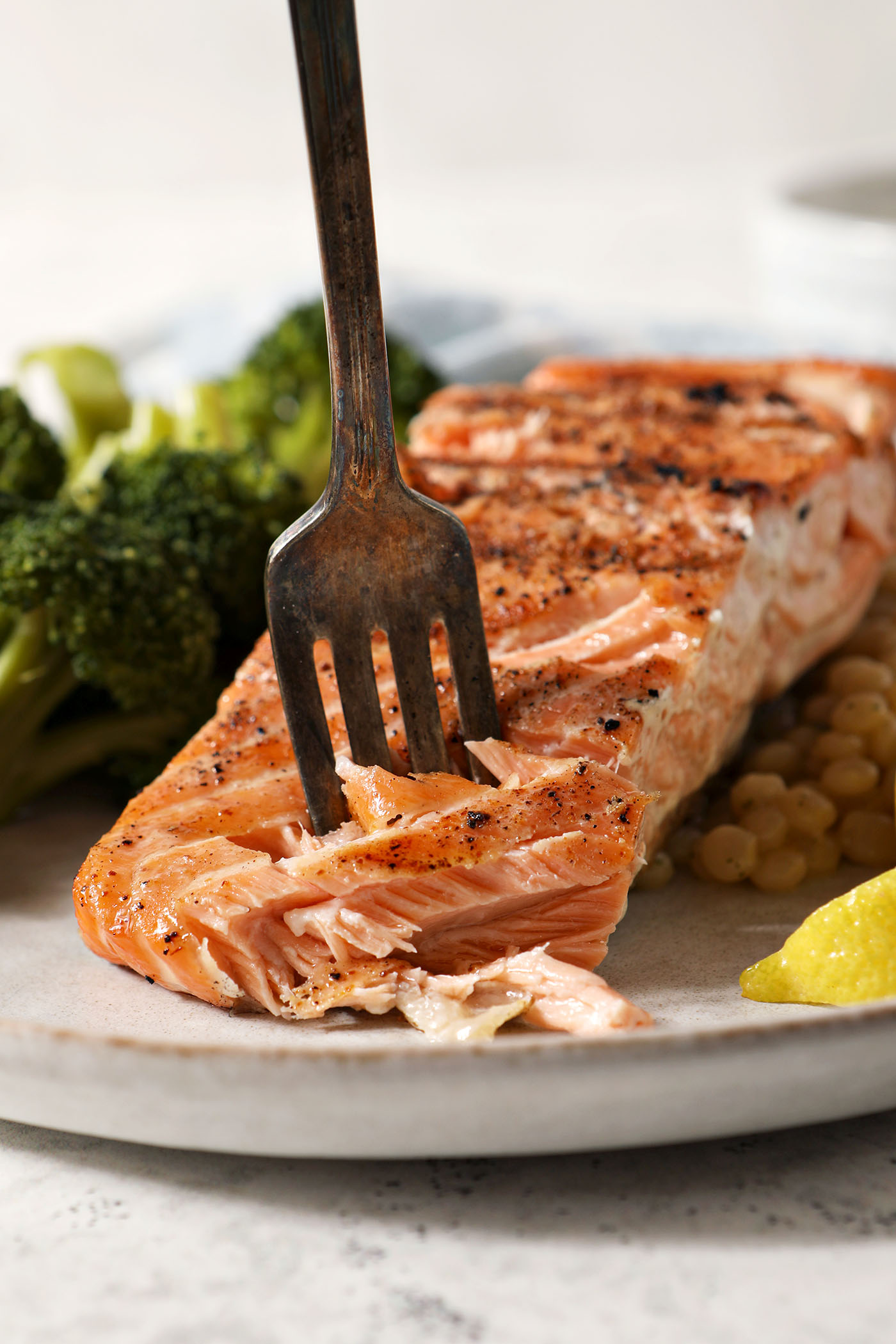
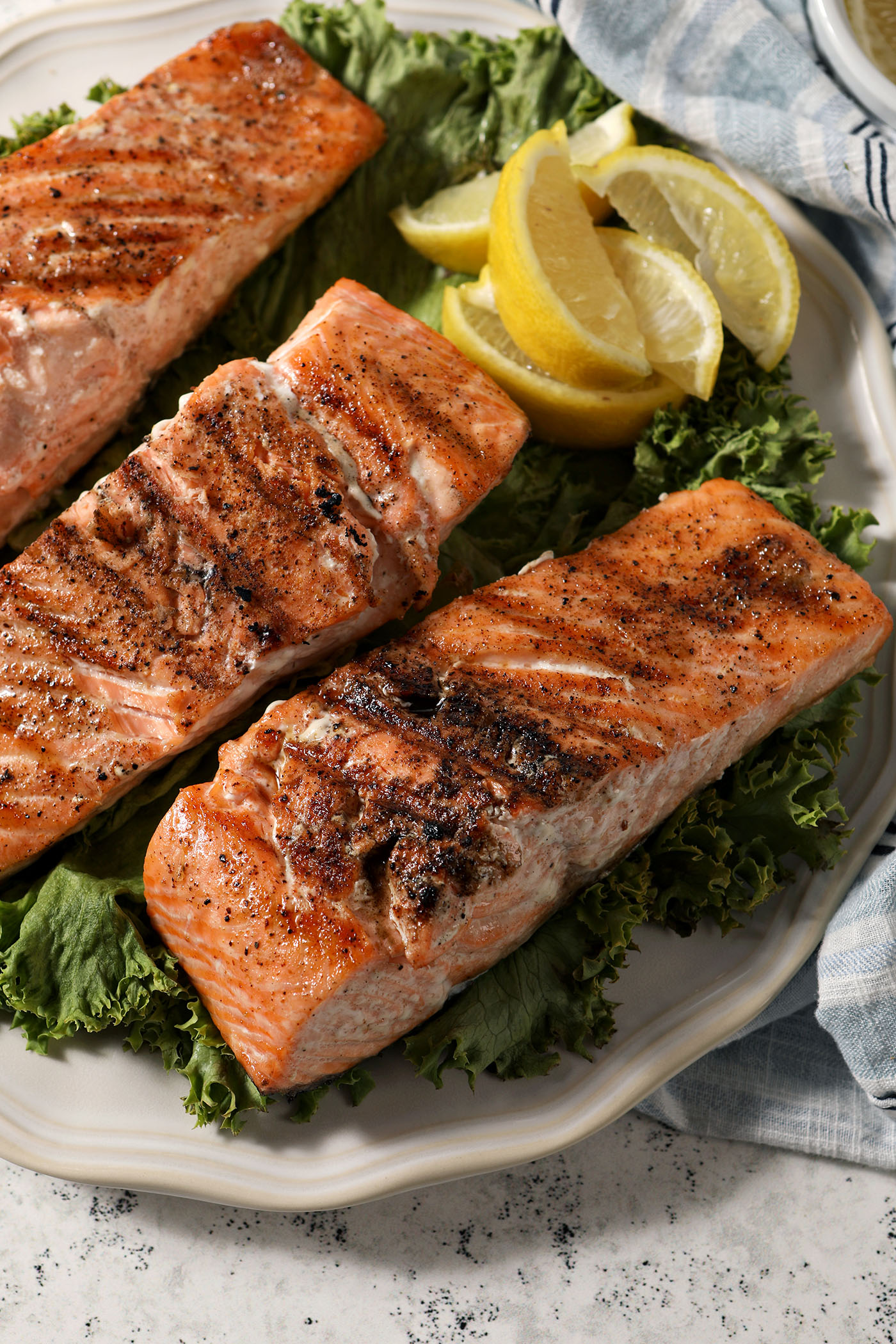
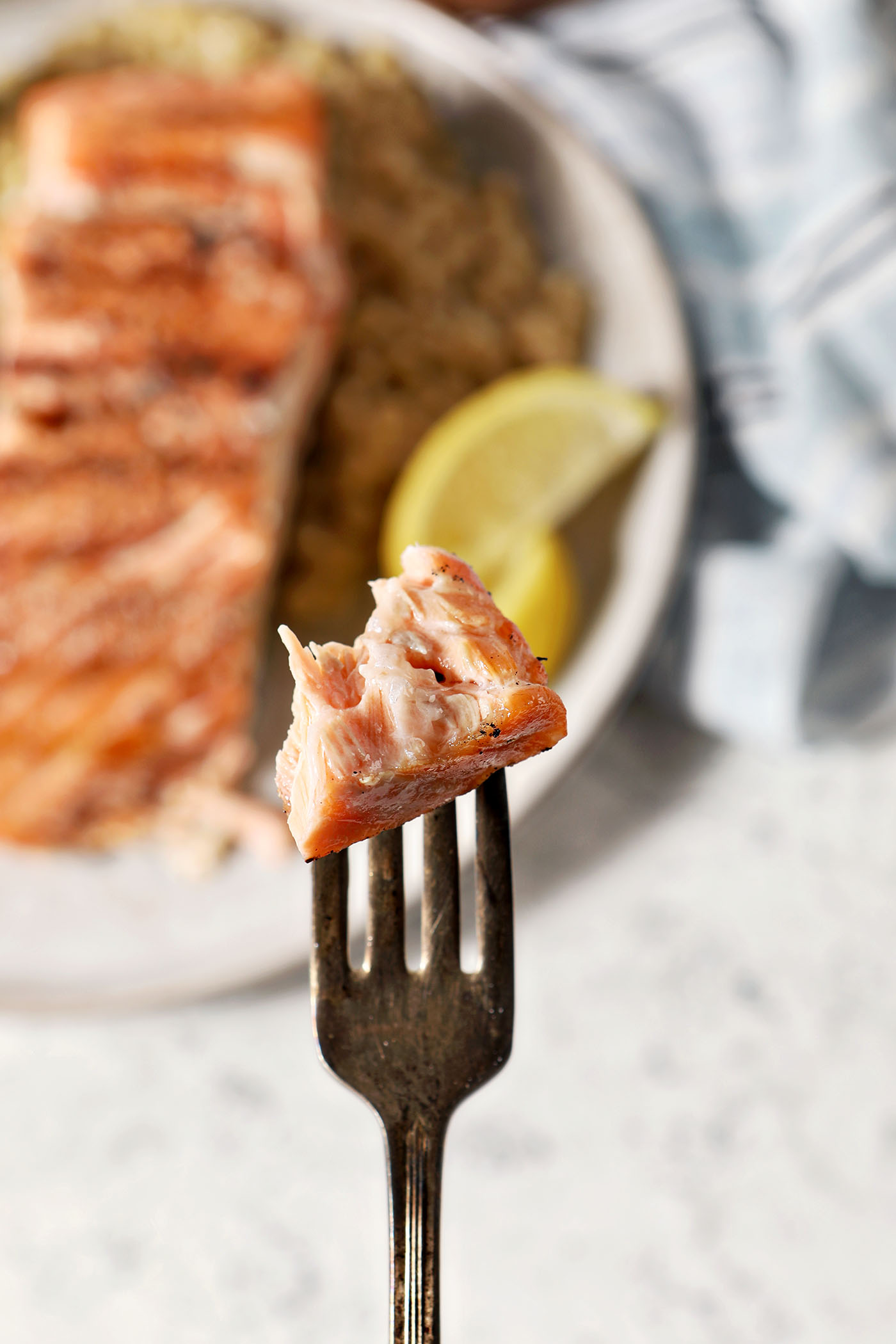
I love this recipe because it proved me wrong about grilling fish. It’s not as scary as it looks and the end result is genuinely impressive: perfectly cooked salmon with a little char on the outside and that beautifully flaky interior.
The technique is straightforward once you know the rules: Indirect heat. Oiled grates. Oiled fish. Skin-on fillets. A meat thermometer.
And the single most important piece of advice I can give you: don’t fight the fish. If it’s not ready to flip, it’s not going to move and if you fight it, you are going to rip it to pieces. Leave it alone. When it releases easily from the grates, that means it is ready. Just trust the process.
This is a weeknight dinner that also works for a casual dinner party. It’s impressive enough to serve to guests but simple enough that you won’t be stressed doing it.
That being said, I don’t recommend trying this recipe out for the first time for a dinner party because guess what? You’re going to be stressed out, even if it sounds simple. (Again, trust me.)
More salmon recipes to try: Blackened Shrimp | How to Bake Salmon | Oven Poached Salmon
What you need to make this recipe:
The Speckled Palate participates in affiliate programs. As an Amazon Associate, I earn a commission from qualifying purchases. Please refer to my disclosure page for more information about these affiliate programs.
- Gas or charcoal grill
- Rimmed sheet pan and parchment paper or foil
- Tongs
- Metal spatula for grilling
- Meat thermometer
Let’s talk ingredients!
In addition to the tools above, you’re going to need some ingredients to make this recipe, too! Chances are, you might already have some of them in your fridge or pantry. Scroll down to the recipe card for the full measurements and instructions.
Here is what you need to get at the store to make this recipe:
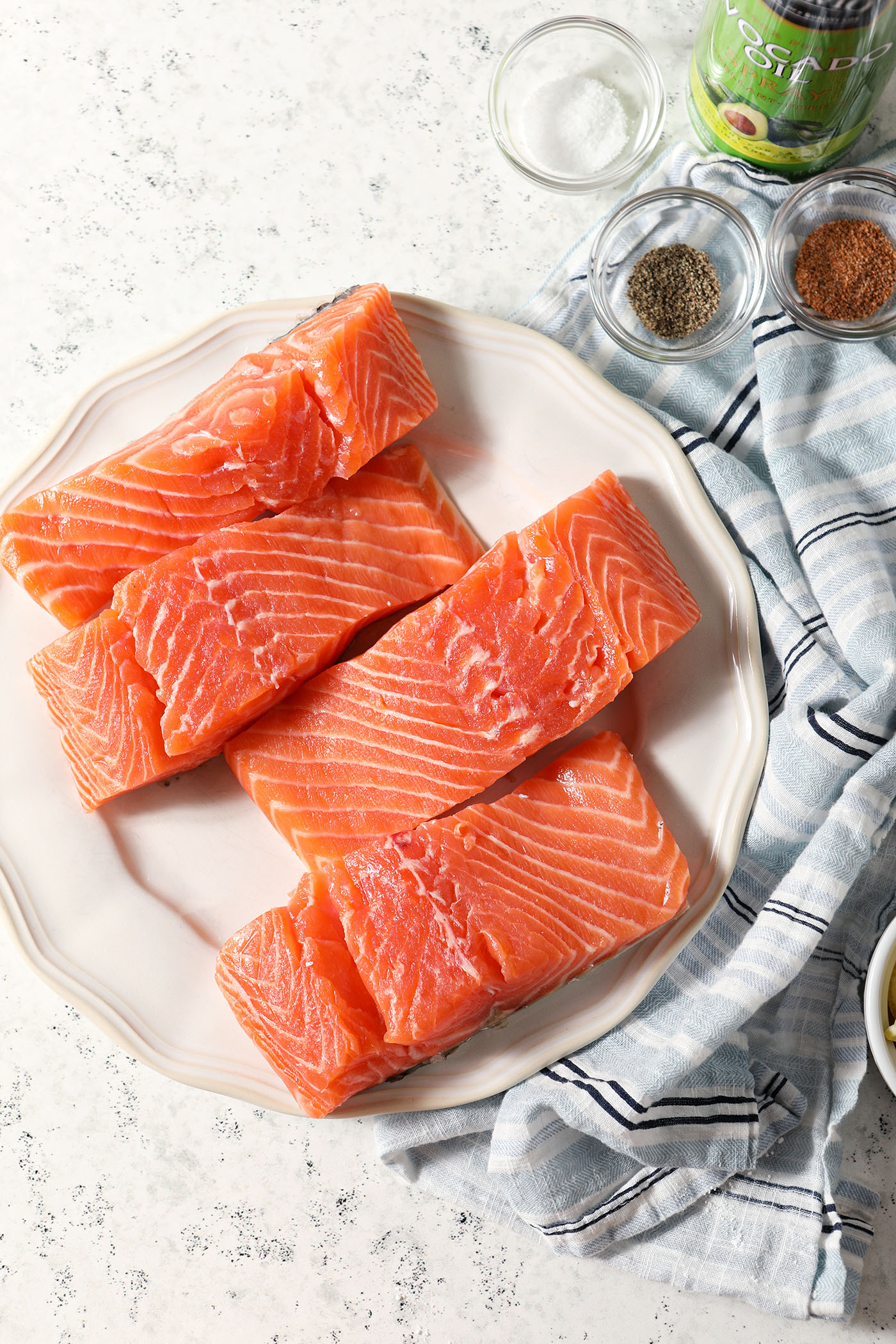
- Salmon — make your life easy and purchase the pre-portioned 4 oz. salmon filets from the grocery store. You can also cut down a larger side of salmon into individual portions.
- Cajun seasoning — this is the only seasoning our salmon needs, and it brings alllll the flavor. This seasoning combines black pepper, garlic powder, paprika, salt and more into a well-rounded blend. You can make your own or purchase a store-bought favorite. My family likes to use a lower-sodium or no-salt option since these seasoning blends tend to have a lot of salt in them.
- 100% avocado oil spray — yes, I know this is a wildly specific ingredient for me to say here, but it is important to use avocado oil spray because it has a high smoke point. (Olive oil does not.) This is important for the grill because we are turning the grill up as high as it can go. We need something that is not going to immediately start smoking when you put the salmon onto the grill. Smoke will add flavor to the salmon but smoke from an oil that is burning does not taste good.
You may season with some extra freshly ground black pepper and a pinch of kosher salt, if desired.
Please note that this technique works for salmon that is NOT in a marinade or a glaze. If you want a recipe containing either of those, this is not the one for you.
How to Grill Salmon
Before you begin! Confirm the grates of your grill are clean. Because you need those to be clean. Also, you want to lightly oil the grates that you plan to use to cook the salmon on. It’s important to do this before you get the grill going because otherwise the oil could drip and cause flare-ups or catch fire and that is not a good thing you want to do.
Preheat the grill. We want it on a medium-high heat around 475°F-550°F. (Keep in mind that when you open the grill, it will lose heat quickly, so we want it screaming hot to begin with.)
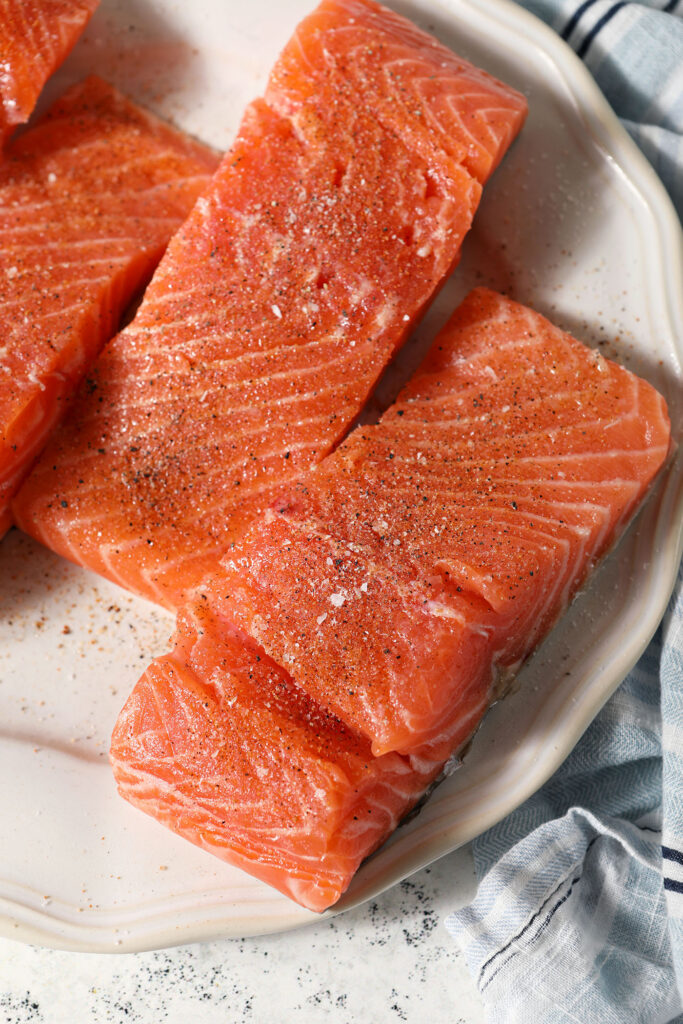
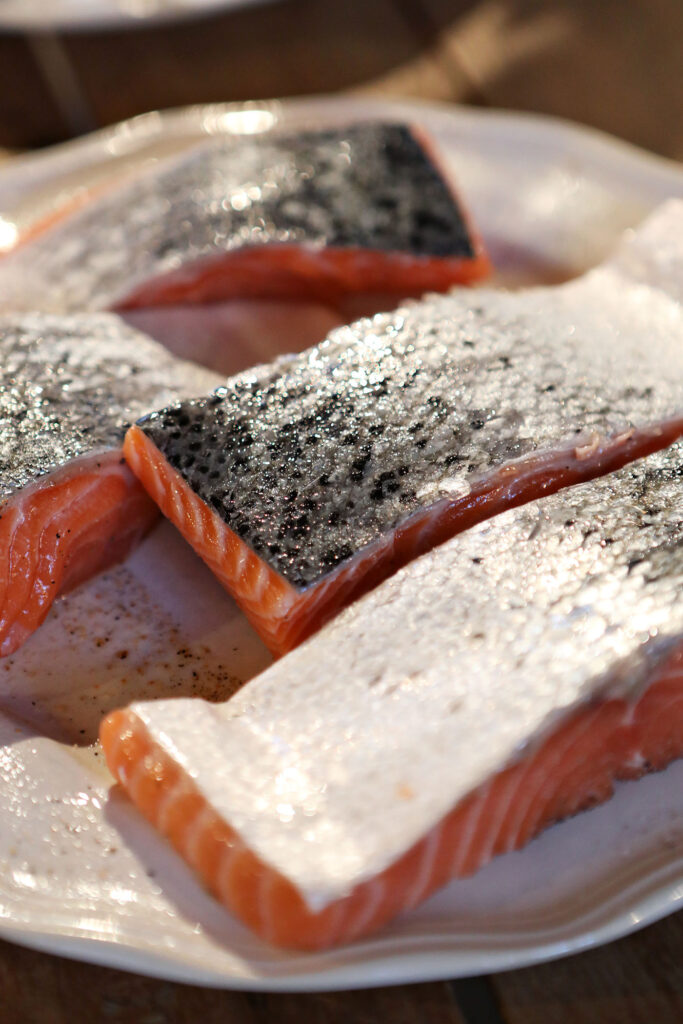
Prepare the salmon while the grill preheats. If it is damp, pat dry with a paper towel. Then spray both sides of the salmon with the avocado oil spray. Season the flesh side with the Cajun seasoning.
Prepare the grill. Right before you put the salmon on the grill, turn off one of the burners. (Preferably in the center of the grill.) You will want to place the salmon directly on top of the burner that is turned off so that the flames do not jump and burn the flesh or the skin of the salmon. The indirect heat is key here.
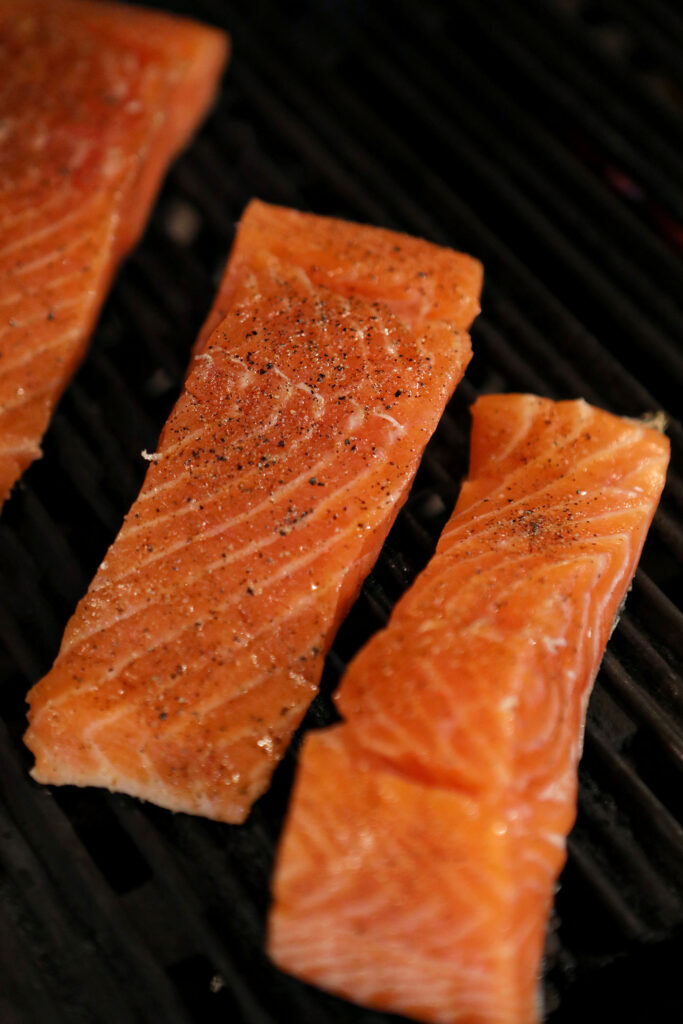
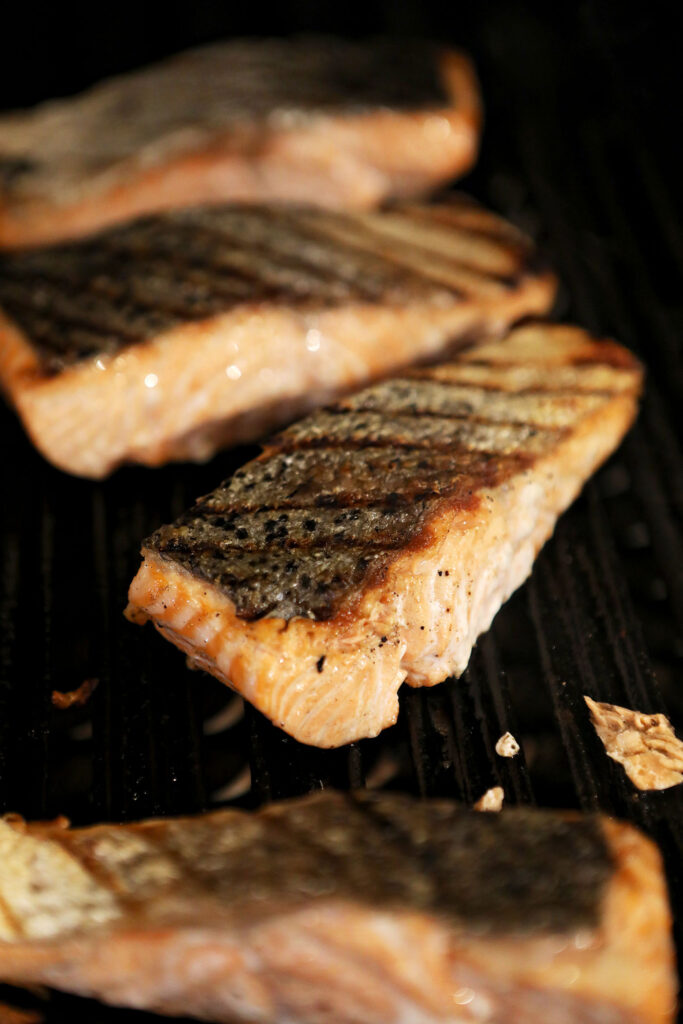
Grill the salmon. Place the salmon skin-side down on the grill grates. Grill for 4-5 minutes per side with a closed lid. When the salmon is ready to turn, the skin should easily release from the grill. If it sticks, it is not ready so give it a little time before trying to flip it again.

Salmon Temperature Guide
The USDA recommends cooking salmon to an internal temperature of 145°F (63°C). I like to remove mine from the oven at 135°F (57°C) because it will continue to cook after it’s removed from the heat, bringing it into the safe temperature range.
Use an instant read meat thermometer* (affiliate link) to check.
Eating raw or undercooked meat may increase your risk of food-borne illness.
Remove and rest. When the salmon has reached its ideal temperature, remove it from the grill and cover with a sheet of foil. Let it rest for 5-10 minutes.
Enjoy! Serve warm with your favorite sides.
how to store:
Let the salmon cool completely then transfer to an airtight container. Store in the refrigerator for 2-3 days.
Reheat in the microwave in 30-second bursts until warmed through. It will be a little bit drier than it is originally because the microwave will dry it out but it should still be delicious.
Erin’s Easy Entertaining Tips
As I said above, this would be a wonderful recipe to serve at a casual dinner party, especially if you’re planning on enjoying it outdoors. That being said, I do not recommend making this for the first time if you’re going to be serving it to a crowd because you are going to be a mess. (No offense.)
If I were to make this for a crowd, I would test it out first on just my family to ensure I know what I am doing and then I would do the following…
- Double or triple the recipe. The beauty in this salmon recipe is that you can very easily make more for a crowd.
- Bring the party outdoors. You need to stay by the grill while the salmon cooks because this is not a set-it-and-forget-it situation. The salmon cooks quickly and needs your attention, so plan to be standing by the grill for the duration.
- Serve it with different sauces. While the salmon is fantastic on its own, you could pair it with some classic or more unique sauces to add some different flavor. (We love it paired with this Cajun Remoulade.) You could even offer several different sauces for your guests to pick and choose what sounds good to them.
Frequently Asked Questions
No, you can use a regular metal spatula to grill your salmon. I like to use a pair of tongs to gently place the salmon on the grill and then use the spatula to flip it.
Leave that skin on. It gets beautifully crisp and creates a barrier between the flesh of the fish and the grill for that first round of cooking.
I like to spray both sides of the salmon with an avocado oil spray. The avocado oil spray is particularly great for recipes like this because it is a high smoke point oil. You can also rub a little bit of oil onto the grates of the grill after those have been cleaned but you need to do that before you’ve got the fire on. Otherwise, the oil could catch fire.
Use a meat thermometer to confirm the salmon is cooked through completely. Don’t do this by eye.
Salmon should reach an internal temperature of 135°F. Insert the meat thermometer’s tip into the thickest part of the salmon and take the temperature. Remove it from the grill when it reaches 130°F and cover it gently with foil to rest for a couple of minutes before serving. (Removing it before it hits the desired temperature and covering it will help it continue cooking.)
Indirect heat on the grill for meats is always a win in my book.
Absolutely, you’ll use the same method here, with one side of the grill being super hot heat and the other side being indirect. It will take longer to do this since charcoal takes a lot of fire up but you’ll get a great smoky flavor from the charcoal that you will not get from a gas grill.
You can absolutely use frozen salmon, but you need to defrost it completely in the refrigerator before you cook it.
You probably can though I have not tried this. If I were to try it with a different fish, I would want it to have a similar thickness to these salmon fillets because I fear that a thinner fish fillet would fall apart when cooked directly on the grates of the grill.
For me and my grill it took about four to five minutes per side to get the salmon to temperature. This will be dependent on the heat of the grill as well as how many times you open the grill because every time you open the grill, a lot of heat escapes.
Quick tips and tricks to the best grilled fish filets
- Indirect heat is your best friend. Cooking the salmon over unlit burners and letting all the other burners gives you the heat you need without charring the exterior of the fish before the inside is cooked to perfection.
- Don’t forget the avocado oil! I like to spritz both sides of the salmon with this before seasoning. You can also oil the grates but you need to do this before you turn on the grill. Otherwise the oil could cause flare-ups or catch fire. I recommend using avocado oil spray because it is a high smoke point oil.
- Don’t fight the fish. If the salmon isn’t ready to flip, it will not be easy to lift off the grill grate. Leave it alone and give it another minute. When it releases easily from the grill, it’s ready.
- Use a meat thermometer. The salmon is done when it reaches an internal temperature of at least 135°F. This is not something that you want to guess about.
- Skin-on is the way to go. It acts as a natural barrier between the fish and the grates and helps hold everything together. Plus, it crisps up beautifully and is delicious to eat!
- Thickness matters. Aim for fillets that are at least 1.25 to 1.5 inches thick. Thinner pieces of fish are more likely to stick or fall apart on the grill.
Here’s how to make this recipe…
How to Grill Salmon
EQUIPMENT
As an Amazon Associate and member of other affiliate programs, I earn from qualifying purchases.
- gas or charcoal grill
- Metal spatula for grilling
Ingredients
- 1.25 lbs. salmon 1.25” – 1.5” thickness, skin on (cut into 4 oz. fillets)
- 1 ½ teaspoons Cajun seasoning
- 100% avocado oil spray
Want to save this?
Instructions
- Lightly oil the grates you plan to cook the salmon on before turning on the heat.
- Preheat the grill. We want it on a medium-high heat around 475°F-550°F. (Keep in mind that when you open the grill, it will lose heat quickly, so we want it screaming hot to begin with.)
- While the grill preheats, prepare the salmon. Spray both sides of the 1.25 lbs. salmon fillets with the 100% avocado oil spray. Season the flesh side with 1 ½ teaspoons Cajun seasoning.
- Right before you put the salmon on the grill, turn off one of the burners. You will want to place the salmon directly on top of the burner that is turned off so that the flames do not jump and burn the flesh or the skin of the salmon. The indirect heat is key here.
- Place the salmon on the grill, skin-side down. Grill for 4-5 minutes per side. When the salmon is ready to turn, the skin should easily release from the grill. If it sticks, it is not ready so give it a little time before trying to flip it again.
- When the salmon reaches 130°F internally, remove from the grill. Cover with a sheet of foil for 5-10 minutes to rest. The temperature needs to rise to 135°F for it to be safely enjoyed, but you can cook it to 145°F if you prefer it more cooked through.
- Serve warm with your favorite sides.
Video
Notes
Nutrition

About the Author:
Erin Parker is the recipe developer, food photographer and founder of The Speckled Palate, where she shares recipes, many Southern and Louisiana-inspired, and easy, low-key entertaining ideas since 2011. Whether you’re searching for a weeknight dinner or a party menu, Erin’s recipes are made for sharing with the people you love. Learn more about Erin and learn more about TSP.
Before leaving a comment or rating, ask yourself: